Everybody has their own idea about what public relations is or isn’t. At United Fruit, some of our people thought it was all about getting things in the newspapers. Others thought it was about keeping things out of the papers. Still others thought that it was about fixing speeding tickets or lining up hookers. One of our vice presidents, who was gay, was arrested for cruising the men’s room of a Greyhound bus terminal. Getting him out of a police lock-up at eleven o’clock at night and erasing his name from the police blotter was seen as public relations. One of our employees killed his friend with a hammer in a drunken argument, and I was able to keep the name of the company out of the papers. When an accounting clerk robs the company of a quarter of a million dollars, it reflects poorly on the company. When that happened, we fired the guy and never reported the theft. During the Vietnam War, our refrigerated ships were carrying bodies in our holds. Not something we wanted out there, but you get the idea.
Every profession has its PR people: finance, entertainment, government. Artists, the military, legal. Medical, labor, politics. Sports and the media. It has permeated every aspect of our culture. Even prostitution has PR. ln Boston, in the 1970s, Combat Zone hookers had a PR person and a lawyer on retainer.
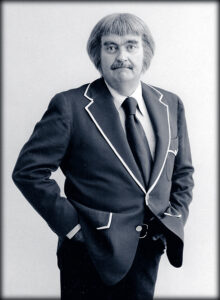
One of my favorite PR stories happened in Panama City in the late sixties. I took Bob Keeshan, aka Captain Kangaroo, to Costa Rica and Panama. The purpose of the trip was to show his audience how bananas grow. We took the entire cast and crew, including Mr. Greenjeans, Bunny Rabbit, Grandfather Clock, and Mr. Moose. Our last stop was in Panama City, where my Panama PR man, Esteban Lopez, arranged for the captain to pilot a yacht belonging to the governor of the Canal Zone. This was several years before President Carter gave the canal to the Panamanians, so the governor was an American. The yacht was the sister ship to the presidential yacht, the Honey Fitz, and Bob said it was the biggest thrill of his life.
That night, after a nice dinner at the El Panama Hilton, Bob decided to take a walk. Not a good idea to walk the streets of Panama after dark, but Bob did what he wanted. He’d served as a marine in WWII and had been through all the major battles in the Pacific. He thought he was bulletproof. A block away from the hotel, he was approached by a young woman. He said he told her, “Not now,” or something along those lines, whereupon she whipped out a business card and put it in his hand. He showed it to me the next morning at breakfast. It read:
CHIQUITA
Relaciones Publcas
The card had her phone number on the third line. Of course, chiquita means “young girl” in Spanish.
After breakfast Bob went to a house phone in the lobby while I checked us out. Several minutes later he returned to me laughing and said that when he was on the phone, a short guy with the biggest pistol he had ever seen pressed the gun into Bob’s ribs and said, “Your money or your life, gordo.” Gordo means fat, and Bob was certainly portly. Bob handed over his wallet, and the guy also took his Rolex and walked off. Not even being robbed bothered Bob, however. He was a great guy. Really cool.
In the early seventies, I arrived at my office one morning and saw the red light on my phone flashing, indicating a message from the receptionist on the floor above. I called her. She said there was a man to see me. He would not give her his name or why he wanted to see me. Sotto voce, she whispered that he was different, I told her to send him up.
The guy was about my age—early thirties—and wore a loud striped sport coat that I knew he did not get at Louis of Boston. It looked like he had slept in his clothes. Silk shirt. No tie. Gold chains around his neck. Probably not real gold. Long hair. A Mickey Mouse watch. Cowboy boots. I could smell booze—he wasn’t drunk, but I know booze when I smell it.
He got right to the point. He told me that he had flown all night on the redeye from LA just to see me. He said he chose Boston because he planned to move here. He thought he would like the people here. He saw Bostonians as conservative, educated, reasonable people. He also knew there was good medical care here. He said Boston was just the opposite of Las Vegas, where he had worked before. He was looking for a job in financial public relations. He admitted that he did not know anything about financial PR, but he was smart and he could learn and he thought I could teach him.
I asked why financial PR? Because it was the opposite of entertainment public relations, he said. He worked for one of the largest hotels in Las Vegas, and his job was to get the hotel in the papers as a place to go to see headliners, to be seen, to get good food, and to people-watch. Above all, to see a good show. His job had been to keep bad news out of the papers, from Mob ownership to suicides. But he was sick of it, he said. If he stayed in that business, he would die.
Then he told me about an incident at the hotel that was, for him, the last straw.
Two weeks ago, he said, a headlining male singer (not Sinatra or Elvis or Tony Bennett) appeared at the hotel. This guy was famous for one song in particular and for his energetic gyrations on stage. He was also known for the very large bulge in his pants, which visibly moved up and down as he performed. It was not the traditional pair of socks stuffed in a jock—this one moved with the man. It jiggled and wiggled.
On this particular night, halfway through his act, people in the front row saw something creeping out of his left pant leg. It was about two feet long. Like a whip it followed him around from one end of the stage to the other. “It was not a snake,” my visitor said. “It was a thin gold chain.” As the singer moved, another couple of feet of chain came out, and even the people in the cheap seats could see it. Laughter broke out, and the audience was not supposed to be laughing.
The headliner looked down and saw what they were laughing at. He almost tripped on the chain, which he tried to pull back up into his pants. He needed both hands. His hand mic was no longer capturing his singing. He pulled at the chain and tried to stuff it into his jacket pocket. He couldn’t do that with one hand, and more chain fell to the floor and whipped around his feet. He continued singing as best he could, but the audience had erupted. They started clapping. What a show! He finally gave up and ran off the stage. His secret was out . . . really out.
My visitor explained that the singer had a twelve-foot chain that folded over and over until it was nine inches long and very heavy. And very flexible. He hung the chain on a special hook attached to the left side of his pant leg. But that night the clip broke! What in show business is called a wardrobe malfunction.
My visitor shook his head. “My job was to keep it out of the papers. The columnists in Vegas are vicious. Thank God there were no pictures. How do you keep something like that out of the papers? You don’t. But I did. I don’t know how I did it, but I did. And I can’t do things like that anymore. This job will kill me. I know I am going to have a heart attack or a stroke. I know it. My boss does not know I am here and I got to be back in Vegas tonight to give my two weeks’ notice. Please give me a job here in Boston. Please save me.”
I couldn’t save him, but I’ve often wondered what happened to him.
Over the years, my view of PR has changed. The Public Relations Society of America is a staunch defender of a profession that is not a profession. A profession has a body of knowledge, standards, rules, and ethics. Public relations is a talent or a skill. It is a business. A big business. But it is not a profession.
I expect I will hear from the PRSA, who may want to take back the two Silver Anvil awards they presented me in the sixties and seventies, their equivalent of the Oscars. I don’t know what I did with the trophies, but I am sure they will erase my name from wherever they have it listed in their annals. And you know what? I’m OK with that.