In 1969, I had an idea for a character in either a book or a movie, based on a fictional PR man named Will Hutzler. He was a shadowy figure—a no-office, no-staff public relations genius—who commanded large fees from his top clients who had major problems or who saw, in his unique ideas, new opportunities for making money. His clients included US presidents and even whole countries. His work was legendary.
I talked with Web Lithgow about this and together we decided to write a film script. The idea was to get it independently produced. In those days, it was possible to make a relatively low-cost film, interest investors in putting money into it, make a distribution deal with an exhibitor, and get actors (even “name” actors) to work for industry scale.
It was also possible to talk to “name” directors and producers and get them to read your script. Web and I launched an effort to do a few scenes from our screenplay. Along the way, over a period of about a year and half, we either spoke to or corresponded with people in the film business and got them to read our fifty-page scenario/script. Among others, we talked to Walter Matthau, Eli Wallach, and Paul Newman.
Wallach was especially enthusiastic and offered to help us when we told him we were going to produce a few scenes from our screenplay. He offered to introduce us to members of the famed Actors Studio in New York and arrange for auditions with some of them. The actor we were most eager to land was the one who would play the leading character, Will Hutzler. We saw Hutzler as a “Whiplash Willy” type, the sleazy lawyer Matthau played in The Fortune Cookie.
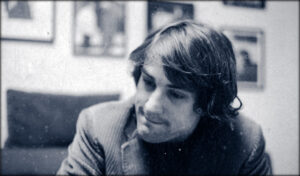
On audition day, Web and I drove to New York City. Outside the door of the office we used for auditions, there were about twenty actors, most of whom were Walter Matthau types and dressed accordingly. The fourth or fifth actor who came in said, as soon as he crossed the threshold, “I’m not Walter Matthau, but I am an actor and I come out for everything. My name is Bob De Niro. I’m not right for this part—I know that. But someday I might be right for something else you guys are doing. I hope you will remember me.”
In his early twenties, he wore a corduroy jacket and dungarees. He drank coffee out of a paper cup. He was obviously Italian. We invited him to sit down. He told us that he was not the kind of an actor who could be a waiter, elevator operator, doorman or the like. He said that he spent all of his time, all day every day, developing his career. He said his mother was a “saint” who supported his “habit.” He explained that his habit was his acting career and that his mother believed in him. She operated a small letter shop in the Village that earned some money.
Bob showed us a small, Woolworth-type scrapbook that he said his mother put together for him, mostly children’s plays he performed in when he was in elementary school and junior high. At one point he was in a rhythm band. He didn’t even have a headshot photo, which most actors have, but he had made himself up as the “Ratso Rizzo” character Dustin Hoffman played in Midnight Cowboy. He explained how he put eyebrow pencil on his teeth to indicate the rot on them and how he got it off with nail polish remover, along with some of his tooth enamel. He left us with a half-page biographical sketch of his contact information and a few off off-Broadway things he had done.
Web and I saw that he was a very serious, intelligent, hard-working, and determined young man. He was very upbeat, very sure of himself, and not at all discouraged by a business that is a meat grinder of hopes and dreams. I asked Web to take a picture of Bob, which he did. Web recently reminded me that I didn’t ask him to take pictures of any of the other auditioning actors that day. There was just something about Bob De Niro that we wanted to preserve.
As for the Hutzler story, we pursued it for the next couple of years and managed to get our script to some major studios, one of which expressed interest to the extent of having the late, great Terry Southern become a script doctor for the screenplay. It never came to be anything and we gave up after a few years and decided that television was a better target for us than making movies. But it was a memorable experience.