United Fruit’s New York headquarters was at Pier 3 on the Hudson River, at the lowermost point in Manhattan and a football field away from the Statue of Liberty. Hector Harris Robson, an unsmiling Scotsman, was in charge of pier operations. Hector had started out in the company as an “oiler,” the lowest position on the ships, but he was a tough, feared man who worked up to his senior position. He also loved movies.
The producers of On the Waterfront, which would star the new Hollywood sensation Marlon Brando, needed a pier location and approached Mr. Robson. They described the movie in a very positive light: socially relevant and something that would reflect well on everybody connected with it. Of course, they were lying. Hollywood producers will say anything to get a location they want. They also told Hector that filming would be minimally disruptive to pier operations—mostly on weekends—and there would be an opportunity for our longshoremen to pick up some extra money working as extras. Those were also lies. Hector gave them a tentative yes but wisely asked our labor relations man, Ed Neary, to get the script and read it.
Neary immediately smelled a rat. When he asked to see the script, the producers dragged their feet and made all kinds of excuses as to why they couldn’t share it. But Neary persisted. He demanded a copy and finally got it. The next day the company said no. Anyone who has seen that film knows that the company made the right decision: It is very anti-union and full of scenes depicting working men as corrupt, violent, and criminal—just the opposite of how the producers described it. Neary later found out that they had been turned down at several other piers on both sides of the river.
It was a narrow escape, but Hector still loved movies, and a couple of years later he was approached by the producers of Sabrina, a romantic comedy starring Humphrey Bogart, Audrey Hepburn, and William Holden, three very hot box-office attractions. The producers wanted to film the final scene at our pier. The company agreed. In the scene, the character played by Bogart has finally realized that he is in love with Sabrina, Hepburn’s character, who is leaving for Paris on a French Line ship, in despair over the love affair. But Bogart is late: the ship has sailed, and his only chance of getting to it is to jump on a waiting tugboat and dash out to the French liner, which is steaming down the river. The script has the tug moving alongside the liner so that he can board the ship by climbing up a gangway ladder. Once on deck, he meets Sabrina, they embrace, and the movie ends. Wonderful drama and pathos.
The film crew arrived early in the morning and set up, positioning the tug next to the pier. Filming was to start as soon as a scheduled French liner passed the pier about 12:30. Bogart was to step off the pier and onto the deck of the tug, across a distance of eighteen inches or so. That morning, however, the French Line baggage handlers had called a wildcat strike, and office personnel had to load on the baggage, resulting in a delay of a couple of hours. As the tide went out, the deck of the tug went lower, and the director, Billy Wilder, realized he had to “establish” Bogart on the deck of the tug. Bogart had been drinking from his silver flask all morning, and by the time he was placed on the deck he was losing his balance and his patience. His mood was foul.
I was a reporter for the company magazine that day, and my job was to take a picture of Bogey and get him to say a few words. Because it was a Moran tugboat, and United Fruit was Moran’s best customer, I was able to get on the tug. Before it got underway, I was told I had to get off. I took my time. The atmosphere was tense. The light was failing, the shot had to happen soon, and Wilder had his hands full managing a drunken star as he negotiated a precarious leap from pier to boat. Bogey, meanwhile, was no longer keeping the flask in his breast pocket but was openly swigging from it. The flask never left his hand. And I couldn’t take a picture of Humphrey Bogart with a flask in his hand. He was having trouble standing upright on the deck, which was heaving as the tide kept going out and the wind picked up. Wilder was frantic. Finally, we got word that the French Line ship was underway from its uptown pier and would be passing where we were, a little north of the Statue of Liberty, in about ten minutes.
Things got very busy. I had loitered on deck but was told to get off immediately. I didn’t have a photo of Bogart and hadn’t spoken to him. He was alone and in a very bad mood, muttering to himself. It was now or never for me. I took a deep breath and ran up to him. I was face to face with a slight, pasty-faced man, who was famous all over the world. I said, “Mr. Bogart, I am a reporter for the company’s magazine, and I would just like to get a picture of you and maybe ask you to say a couple of words for our readers.” He turned to me and in a boozy way said, “I’d be delighted to give you a few words.” He spoke, I snapped the picture, and within sixty seconds I was back on land. The picture and a caption appeared in the company magazine.
Fast forward sixty years, when, among my many interests, I was active in Boston University’s Special Collections Archive, founded by Howard Gottlieb and built over several decades by him and his successor and executive director, Vita Paladino. The archive includes material documenting some of the biggest names in Hollywood, from Bette Davis to Fred Astaire to Gene Kelly and scores of others. The Martin Luther King archive is housed there as are the papers of many writers, artists, statesmen, journalists, and other top people in their fields. My association with this special collection has been one of the highlights of my life in Boston.
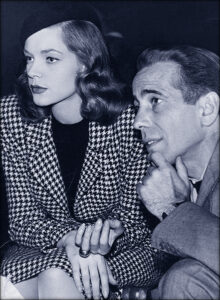
Several years ago, Vita and her board of advisers voted to bestow its Bette Davis Outstanding Actress Award to Lauren Bacall. The first recipient had been Meryl Streep. Bacall had a reputation for being somewhat difficult, but Vita was excellent at handling difficult people. She agreed to not require anything more of Bacall than saying a simple thank you when the award was presented to her by Bette Davis’s son, the noted Boston attorney Michael Merrill. Bacall had made it clear that she did not like speeches or crowds.
Immediately after the presentation, and as the reception began, Vita came to me and asked me to take Bacall to the Algonquin Club, where in an hour or so there would be a special dinner for about forty people. Vita told me that Bacall was “hungry and thirsty” and just wanted to relax until dinner time. “Try to keep her amused, Tom,” Vita said. I took this famous actress back to the club, where there was a bit of a scene when the doorman tried to relieve her of the five-pound dog she carried around with her in a sort of sling at her bosom. The doorman lost that one.
I took Bacall up to the large function room where the dinner was to be held and asked her if she would like an appetizer. She said she wanted a shrimp cocktail and a Bombay Sapphire martini. The waitress took the order and Bacall said, “Make it a double on both.” While we waited for the food and drinks to come, I told her that Vita asked me to amuse her as best I could until the group came for dinner. She looked me up and down with that trademark sultry sidelong glance and in that smoky voice said, “OK, amuse me. What do you do?”
I cleared my throat and said, “Actually, Miss Bacall, I don’t do much. I can tell you what I don’t do. I don’t sing. I don’t dance. I don’t recite. But I can tell you a Bogey story.”
She looked annoyed and said, “Don’t bother. I’ve heard them all.”
I said, “I guarantee you haven’t heard this one. It was just him and me, and I have never told it to anyone before.”
She said, “OK, if you insist. Tell me.”
I told her the story of the tugboat. When I got to the part where I rushed up to Bogart and snapped a photo and asked for a couple of words, I told her what he said: “I’d be happy to give you a couple of words: Bug off kid.”
She looked up at me and said, “That’s not a true story.”
I assured her that it was.
She said, “Bogey would never have said bug off. He would have said say fuck off.”
I said, “Miss Bacall, that’s precisely what he said. I cleaned it up for you.”
“There is no need to clean it up for me,” she said. “I know my guy.”
She had another martini and I joined her. We got on a first-name basis with that martini—her third, my first. Eventually, we all sat down and had a nice dinner. She loved to eat. Across the table from us was the critic Rex Reed, who said at one point, “This lady and I live in the same building—the Dakota in New York—and I see her in the elevator every morning taking this little pooch of hers out for his walk.” To which she replied, “To begin with I ain’t no lady, and I am not taking this little guy out for a walk. I am looking for another guy!”